Harness Engineering: What We Learned Building Agentic AI
- 05.13.2026
Agentic AI Is Not Just About Prompts
A lot of the conversation around Agentic AI still revolves around prompts — how to structure instructions, improve reasoning, or get more reliable outputs from large language models. Prompt engineering is important, but while building our own solution, we quickly realized that it is only a very small part of what makes AI usable in real production environments.
The real challenge starts when AI stops being a demo and becomes part of an actual operational workflow.
At that point, the focus shifts away from “how do we get better responses from the model?” and toward a much bigger question: how do we build systems around the model that are reliable, observable, debuggable, and safe to operate?
That is where harness engineering becomes far more important than prompt engineering.
From AI Features to AI Systems
One of the most important architectural decisions we made was understanding that the LLM should not replace deterministic systems. Instead, it should sit above them as a coordination and decision-making layer.
In practice, this means the model is responsible for understanding intent, planning workflows, coordinating tools, and translating outputs into business context. The actual analytical logic, calculations, validations, and domain-specific processing still happen inside traditional backend systems.
This separation turned out to be critical.
It allowed us to preserve predictability and control while still benefiting from the flexibility of natural language interfaces and agent-based workflows. Rather than creating “AI that does everything,” we ended up building systems where AI orchestrates existing infrastructure in a more intelligent and adaptive way.
That distinction may sound subtle, but it fundamentally changes how production AI systems should be designed.
Most of the Work Happens Around the Model
One of the more surprising realizations during development was that most engineering effort had very little to do with the model itself.
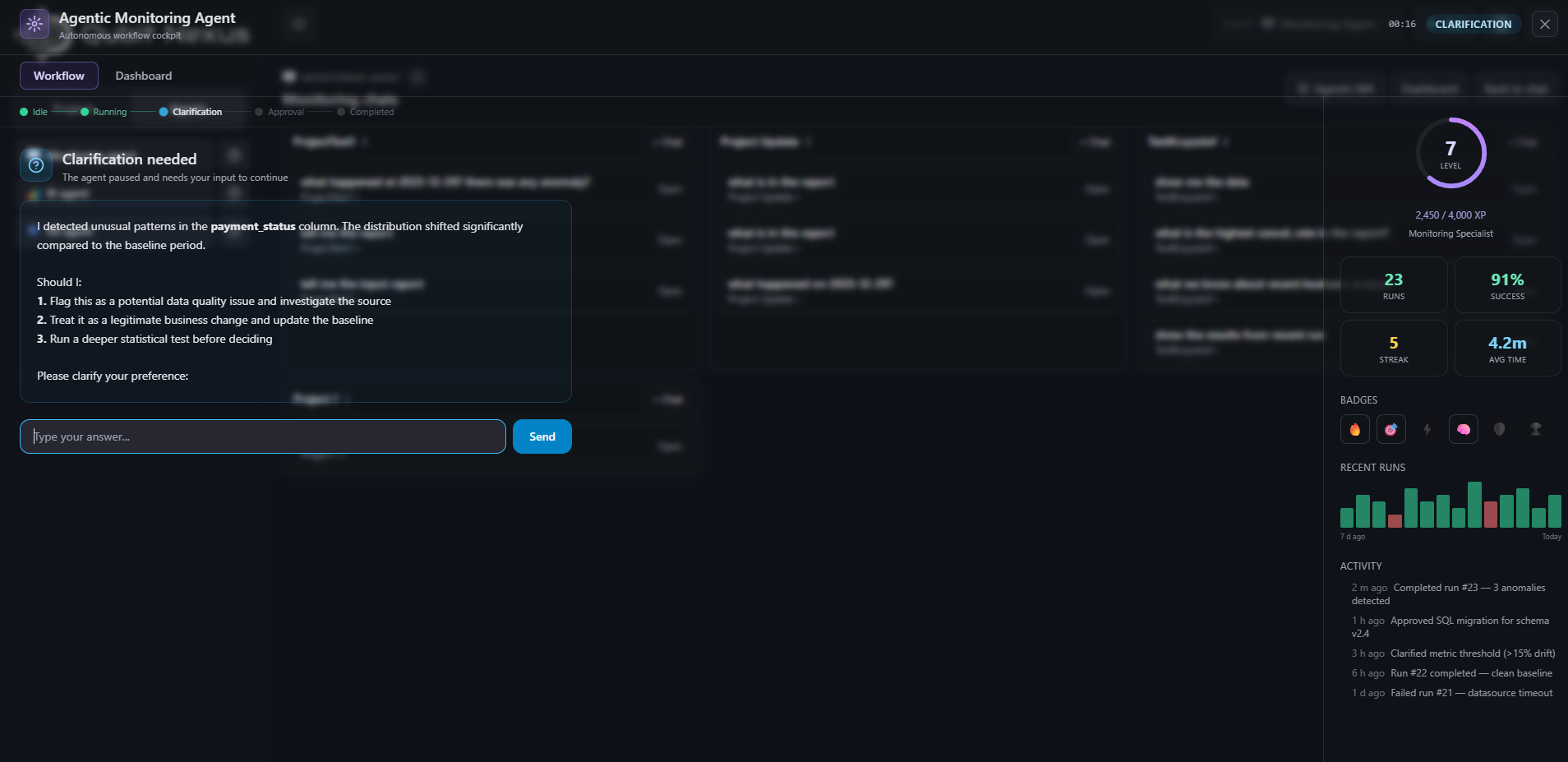
The majority of complexity appeared in the surrounding infrastructure: managing workflow state, validating inputs, handling retries, coordinating execution, tracking failures, storing artifacts, exposing status updates, and making every step observable and reproducible.
In theory, an AI agent can look impressive after a few carefully designed prompts. In production, however, the problems are much more operational.
- What happens when a workflow partially fails?
- How do you reproduce an execution path?
- How do you validate tool usage?
- How do you pause a process for human approval?
- How do you debug a multi-step run that involved several tools and intermediate decisions?
Those questions have much less to do with prompting and much more to do with systems engineering.
That is ultimately what harness engineering represents: the operational layer that makes Agentic AI trustworthy.
Why Observability Changes Everything
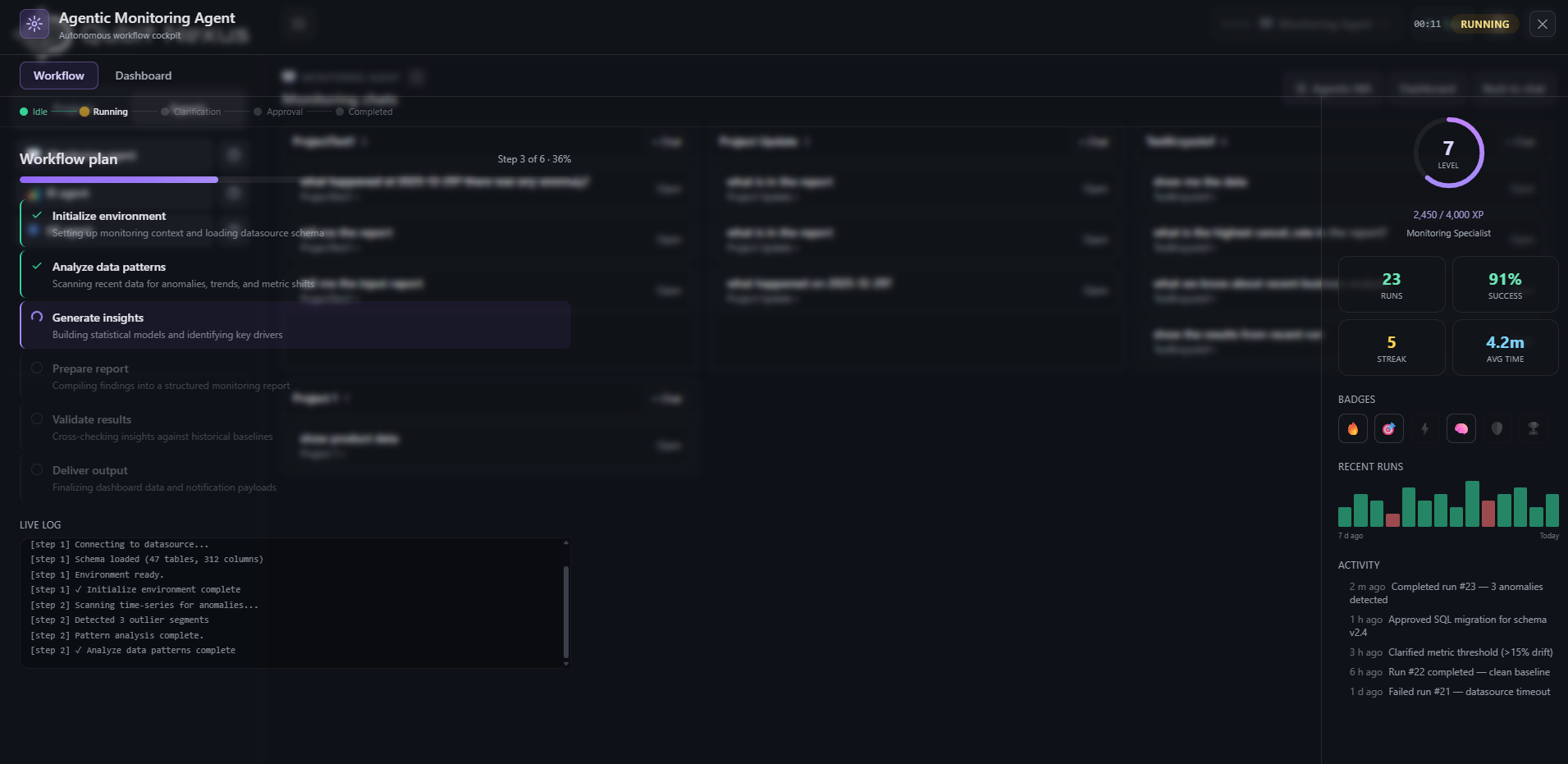
As workflows become more autonomous, observability becomes one of the most important capabilities in the entire architecture.
Traditional applications can often operate with relatively simple logging and monitoring. Agentic systems are different because they involve reasoning steps, orchestration, intermediate decisions, and tool interactions that evolve dynamically during execution.
Once AI starts coordinating workflows, teams need visibility into the entire decision process. They need to understand what the original objective was, how the plan evolved, which tools were called, what failed, and why the system produced a particular outcome.
Without that level of visibility, it becomes extremely difficult to trust AI systems operationally.
In many ways, observability becomes the foundation that allows organizations to move from AI experimentation to AI adoption.
The Emergence of Organizational Memory
Another interesting direction that emerged during development was the idea of structured memory and retrieval.
The real value of Agentic AI does not come from generating isolated responses. It starts appearing when systems can accumulate operational context over time and reuse previous outcomes as part of future decision-making.
That creates the possibility of building organizational memory around workflows, approvals, feedback, and historical patterns.
Over time, AI systems become capable not only of executing tasks, but also of learning how an organization operates — which approaches worked well previously, which configurations created problems, and which decisions were ultimately accepted by humans.
This feels like one of the most important long-term shifts in enterprise AI: moving from stateless interactions toward systems that continuously accumulate operational knowledge.
The Biggest Lesson
The biggest takeaway for us was ultimately very simple.
The value of Agentic AI is not created when a model generates impressive text. The value appears when AI can safely participate in real operational processes.
And making that possible requires much more than prompts.
It requires architecture, orchestration, observability, memory, governance, and carefully designed integration with deterministic systems.
That is what turns AI from a feature into infrastructure.